Retro Game Budget Calculator

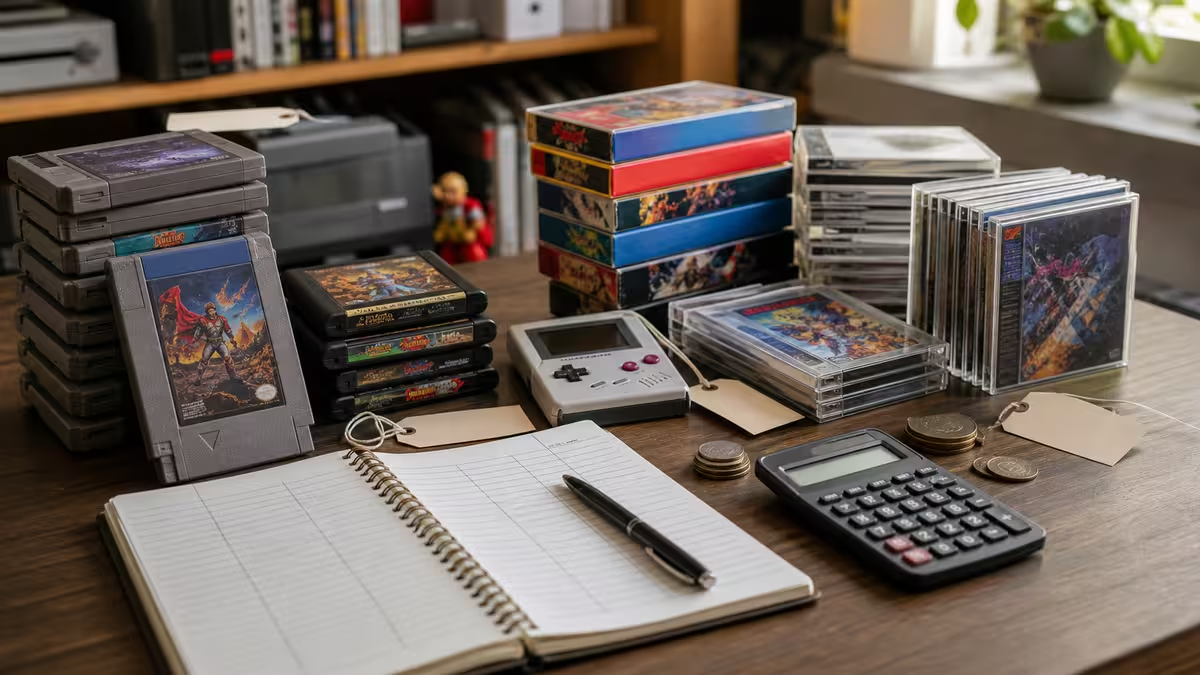
Introduction to retro game budgeting
A retro game collection can be deeply satisfying, but the price of loose cartridges, boxed copies, shipping, and the occasional rare listing can make a monthly budget disappear faster than expected. This retro game budget calculator turns your monthly set-aside, the average price you expect to pay, and the shipping added to each order into an estimate of how many complete games you can buy over the period you choose.
How to use this retro game budget calculator
Use this retro game budget calculator when you want to see how far a fixed collecting budget will go. It is especially useful if you are comparing loose cartridges, complete-in-box copies, or import listings that all carry different average prices and shipping charges.
Use it to answer questions like:
- How many games can I pick up this year if I save a fixed amount each month?
- What happens to my retro game budget if average prices rise or fall?
- How much does shipping change the number of games I can actually afford?
Retro game budget formula (With MathML)
This retro game budget calculator starts with the amount you reserve for collecting, converts that into a total budget, and then divides the total by the cost of one typical order.
Let:
- B = monthly budget
- m = months to plan
- P = average game price
- S = shipping per game
- G = estimated number of games you can buy
The calculator uses this formula:
The floor brackets ⌊ ⌋ mean the result is rounded down to the nearest whole number, since you cannot buy a fraction of a game.
Interpreting Your Retro Game Budget Results
Once you run this retro game budget calculator, the number on screen tells you how many whole games fit inside your planned spending window. The figure is most useful when you read it as a planning limit, not as a promise that every title you want will be available at that price.
Here is how to think about that number:
- Lower game count than expected: Your average price or shipping cost is doing more of the work than you expected. Consider cheaper titles, local pickup, or a longer saving period if you want the count to rise.
- Higher game count than expected: Your retro game budget stretches well at the prices you entered. You may prefer complete-in-box copies, better condition, or a rarer title instead of maximizing quantity.
- Comparing time frames: Adding more months usually increases the total budget in a straight line, but changes in shipping or buying strategy can push the final game count up or down.
Use the results as a planning guide rather than a guarantee. Real-world prices, sales, shipping methods, and the condition of retro games all influence what you actually pay.
Worked Example: a six-month retro game plan
This retro game budget calculator makes the trade-offs easier to see. Imagine you want to plan your purchases for the next six months:
- Monthly budget (B): $50
- Months (m): 6
- Average game price (P): $22
- Shipping per game (S): $3
First, calculate your total budget over six months:
Total budget = 50 × 6 = 300 dollars.
Next, find the effective cost per game:
Cost per game = 22 + 3 = 25 dollars.
Now divide:
Estimated games = 300 ÷ 25 = 12.
After rounding down, you can expect to buy 12 games in six months at your current spending level and price assumptions.
If prices drop to an average of $18 with the same $3 shipping, cost per game becomes $21, and you could buy ⌊300 ÷ 21⌋ = 14 games instead. Small price changes can noticeably affect how quickly your collection grows.
That is why collectors often test several averages before they start hunting: the calculator is not just counting titles, it is showing how much room the market leaves in your budget.
Scenario Comparison Table for Retro Game Budgets
This retro game budget calculator makes scenario comparisons useful because a small shift in average price or shipping can change the number of games you can actually bring home. The rows below are derived from the same formula, so they show how the output moves when one or two inputs change while the budgeting rule stays the same.
| Monthly budget | Average game price | Shipping per game | Months | Estimated games you can buy |
|---|---|---|---|---|
| $30 | $10 | $2 | 6 | 15 games |
| $50 | $20 | $3 | 6 | 13 games |
| $75 | $25 | $4 | 12 | 31 games |
| $100 | $35 | $5 | 12 | 30 games |
These rows are derived from the same formula, so they show how the output changes when you alter a budget, a typical price, or a shipping pattern. Treat them as planning snapshots rather than fixed rules: a local pickup, a bundle lot, or a more expensive import can move your real total away from the example.
Tips to Stretch a Retro Game Budget
Because this retro game budget calculator is driven by average price and shipping, the best ways to improve the result are the ones that lower those two inputs. That usually means changing where you shop, what condition you accept, or how often you combine purchases.
- Buy in lots or bundles: Mixed lots from auctions, flea markets, or local sellers often reduce the average price per game, especially if you are willing to separate the keepers from the duplicates.
- Trade duplicates: Swapping with other collectors can improve your shelf without increasing your cash outlay.
- Focus on one system at a time: Targeting a single console or handheld helps you learn real price ranges and spot a true bargain faster.
- Compare shipping options: Combining orders or buying locally can lower shipping per game enough to change the calculator output.
- Be flexible on condition: Accepting cart-only copies or minor cosmetic wear can cut the average price while still leaving you with a playable collection.
Assumptions and Limitations of the Retro Game Budget Calculator
This retro game budget calculator stays intentionally simple, so it leans on a few assumptions that are worth keeping in mind before you treat the output as a hard goal:
- Game prices and shipping are treated as average values across the whole planning period. A rare cartridge, a bargain lot, or a local pickup can shift the real total.
- Your monthly budget stays constant and remains available for collecting during the months you enter.
- The result is rounded down to a whole game because the calculator only counts complete purchases.
- Costs for consoles, repairs, accessories, batteries, storage, and display cases are not included unless you roll them into your average game price.
- Market swings, sales, condition grades, and currency changes can all move the amount you actually spend, so the output is a planning estimate rather than a guarantee.
The calculator is intended for hobby planning only and does not constitute financial advice. Adjust the numbers to match your region, your preferred platform, and how comfortable you are with spending on retro games.
Planning the Next Step for Your Retro Collection
Use this retro game budget calculator again whenever your monthly set-aside, target system, or collecting priorities change. A new price trend or a different shipping pattern can move the estimate enough to change which titles you chase first.
By keeping an eye on your monthly budget, expected prices, and shipping, you can build a collection at a pace that feels deliberate instead of impulsive. That makes it easier to plan for the next cartridge, disc, or handheld accessory without losing track of the money you want to keep available for other goals.
How the Retro Game Budget Calculator Works
The retro game budget calculator uses the same basic relationship every time: monthly budget multiplied by months, divided by the average cost of one game plus shipping. The formula is simple, but the interpretation is what helps you plan a collection that feels realistic.
Core idea:
- Total budget = monthly budget × number of months
- Cost per game = average game price + shipping per game
- Estimated games = total budget ÷ cost per game, rounded down to a whole game
The result is an estimate of how many full games fit your plan if prices and shipping stay near the averages you entered.
Mini-game: retro collection budget run
Steer the collector through a month of retro game hunting. Catch bundle deals, duplicate trades, price checks, and local pickups while avoiding impulse bids, repro surprises, fake labels, and shipping spikes.
Use pointer movement, arrow keys, W/S, or the lane buttons to steer the collector.
Start the game when you are ready.