Garden Planting Calendar Calculator

Introduction: Frost-Date Timing for Vegetable Gardens
Vegetable planting dates can determine whether seedlings meet a late frost or receive enough warm days to mature. Planting tender crops too early exposes them to freezing weather, while planting too late can reduce the useful growing season before summer heat or autumn frost. A calendar tied to your local last spring frost date gives each crop a practical starting point.
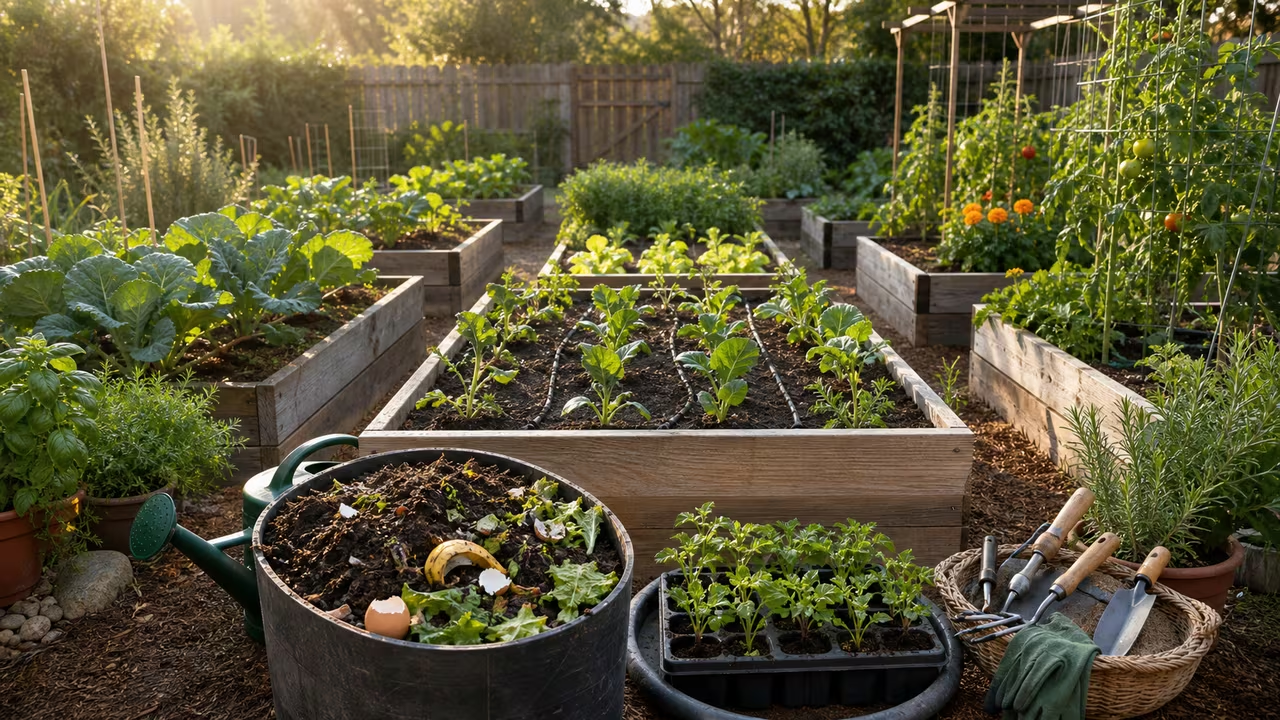
This garden planting calendar calculator takes your average last spring frost date and applies fixed timing rules for the selected vegetable. It returns an indoor seed-starting date when the crop is started indoors, plus an outdoor sowing or transplant date.
How to Use This Vegetable Planting Calendar
- Find your average last spring frost date (see the next section for ways to locate it).
- Enter that date in the calculator.
- Select the vegetable you want to plan: tomatoes, lettuce, carrots, peppers, beans, or cucumbers.
- Submit the form to see the schedule the calculator assigns to that crop:
- An indoor seed-starting date, when indoor starting is used.
- An outdoor sowing or transplant date, measured from your frost date.
Treat the garden calendar dates as planning targets rather than guarantees. They can help you order seed, prepare lights and containers, and organize bed space, but current weather and soil conditions still matter when it is time to plant.
Finding Your Local Last Spring Frost Date
For this planting calendar, the last spring frost date is the average date when your location has its final spring frost at 32°F (0°C). A late frost can still occur before or after that average, but the date is a useful common reference for timing vegetable crops.
Ways to find your local last spring frost date include:
- Using tools from your national or regional weather service that let you search by city or ZIP/postal code.
- Checking your local cooperative extension office website, which often publishes frost-date charts.
- Looking in trusted gardening books or seed catalogs that print frost dates for major cities.
- Asking nearby gardeners or garden clubs which date they use as their rule of thumb.
Remember that hardiness zones are not the same as frost dates. USDA or other hardiness zones describe average minimum winter temperatures and help you choose perennial plants that survive your winters. Frost dates instead focus on when freezing temperatures typically end in spring and begin again in fall, which is more directly related to annual vegetable planting.
How the Garden Calendar Calculates Planting Dates
The garden calculator adds or subtracts fixed numbers of weeks from the last spring frost date according to the vegetable selected. Tomatoes, peppers, lettuce, and cucumbers receive an indoor seed-start date before frost; carrots and beans are scheduled for direct sowing instead.
For an indoor-started crop, the date relationship is:
For outdoor planting, the relationship is:
Here, N and M are crop-specific offsets built into the calculator. The tool uses one date for each step rather than a date range: for example, tomatoes start 6 weeks before frost and transplant 1 week after it.
Indoor Seed Starting and Direct Sowing by Vegetable
This garden planting calendar distinguishes vegetables that are started in trays from crops that are better sown directly where they will grow.
Indoor-started vegetable crops
Tomatoes, peppers, lettuce, and cucumbers receive indoor seed-starting dates in this calculator. Raising these plants before the frost date can give them time to establish before their assigned outdoor transplant date.
- Tomatoes: Start indoors 6 weeks before the last frost and transplant 1 week after it.
- Peppers: Start indoors 8 weeks before the last frost and transplant 2 weeks after it.
- Lettuce: Start indoors 4 weeks before the last frost and transplant on the frost date.
- Cucumbers: Start indoors 4 weeks before the last frost and transplant 2 weeks after it.
Indoor seed starting works best when you have:
- Bright windowsills or grow lights that can be kept a few inches above seedlings.
- Space for trays or pots where temperatures stay reasonably warm and stable.
- Time to water, thin, and transplant seedlings into larger containers if they outgrow the first cells.
Direct-sown vegetable crops
Carrots and beans are shown as direct-sown crops by this calendar, so the result does not assign them an indoor start date.
- Carrots: Direct sow on the entered last spring frost date.
- Beans: Direct sow 2 weeks after the entered last spring frost date.
For all six vegetables, use the calculated date alongside soil temperature, moisture, and the forecast rather than relying on the calendar alone.
Vegetable Timing Rules Used by This Frost-Date Calculator
The table lists the exact week offsets this garden planting calendar applies to the vegetables in its menu. These are the calculator's scheduling rules, not broad regional planting ranges.
| Vegetable | Indoor seed starting | Outdoor planting or transplanting |
|---|---|---|
| Tomatoes | Start indoors 6 weeks before last frost | Transplant 1 week after last frost |
| Peppers | Start indoors 8 weeks before last frost | Transplant 2 weeks after last frost |
| Lettuce | Start indoors 4 weeks before last frost | Transplant on the last frost date |
| Carrots | Not started indoors | Direct sow on the last frost date |
| Beans | Not started indoors | Direct sow 2 weeks after last frost |
| Cucumbers | Start indoors 4 weeks before last frost | Transplant 2 weeks after last frost |
The calculator converts each selected vegetable's offset into a calendar date using the frost date you enter.
Interpreting Your Garden Planting Dates
Your garden planting calendar result displays the selected crop's specific indoor-start instruction and its outdoor planting instruction.
- Indoor seed starting appears as a calendar date for tomatoes, lettuce, peppers, and cucumbers.
- Outdoor planting appears as either a transplant date or a direct-sowing date, depending on the vegetable.
- Carrots and beans show that indoor starting is not required because this calculator schedules them for direct sowing.
Before using an outdoor date, check the extended forecast. Delay transplanting or sowing if a hard frost or unusually cold spell is expected, and harden off seedlings before moving them from indoor conditions to the garden.
The calculator's dates are anchored to the frost date you supplied, so an inaccurate local frost-date estimate will shift every result. Confirm that reference date before purchasing plants or preparing a planting weekend.
Worked Example: Tomato Dates From a May 10 Frost Date
For a tomato schedule, suppose the average last spring frost date entered is May 10.
- Enter May 10 as the last spring frost date.
- Select tomatoes from the vegetable list.
- The calculator subtracts 6 weeks for indoor seed starting and adds 1 week for outdoor transplanting.
Six weeks before May 10 is March 29, and one week after May 10 is May 17.
In calendar terms, the tomato result is:
- Start tomato seeds indoors: March 29
- Transplant tomatoes outdoors: May 17
Use the forecast near May 17 to decide whether conditions are suitable for transplanting. If cold weather is still expected, wait and protect the seedlings until the risk has passed.
Adapting Garden Planting Dates to Your Microclimate
A frost-date planting calendar is most useful when you compare its vegetable dates with the conditions in your own garden. Nearby sites can have different frost exposure, wind, soil warmth, and shelter.
Consider adjusting the suggested dates if you garden in one of the following situations:
- Urban heat island or sheltered courtyard: Buildings and pavement can hold heat and reduce frost risk. Watch local conditions carefully before planting earlier than the calculated date.
- Exposed, windy, or low-lying sites: Cold air often settles in low spots, and wind can stress young plants. These gardens may require waiting beyond the calculated outdoor date.
- Raised beds and containers: Soil in raised beds and pots can warm more quickly than ground soil, but containers can also cool quickly on cold nights. Check soil and nighttime conditions before planting.
- Use of season-extension tools: Row covers, cold frames, and low tunnels can protect crops from brief cold periods. Use them only when you can monitor conditions and provide appropriate ventilation and protection.
Garden Planting Calendar Limitations and Assumptions
This vegetable planting calendar provides fixed frost-date offsets, so it cannot account for every condition that affects seed starting, direct sowing, or transplanting.
- Average, not real-time, weather: Dates are based on the historical average last spring frost date you provide. They do not incorporate current-season weather patterns or sudden cold fronts.
- Fixed crop rules: Each vegetable has one built-in indoor-start offset and one outdoor offset. The calculator does not vary those dates by cultivar, soil temperature, or local growing season length.
- Healthy seedlings: The indoor-start dates assume normal germination and growth rates. Stressed or slow-growing seedlings may need extra time indoors before transplanting.
- Temperate climates: The calculator is most useful in regions with a recognizable spring frost season. In very mild climates with rare frost, or in extremely short-season, high-elevation, or far-north locations, local guidance may call for different timing.
- Single reference frost date: Many sources publish different frost dates for different risk levels. The tool uses the single representative last-spring-frost date entered in the form.
Use the calculated dates as a first garden-planning pass, then refine them with local observations. Notes on frost events, planting dates, soil conditions, and harvest timing can help you decide how closely future seasons should follow the schedule.
Next Steps After Creating Your Vegetable Planting Schedule
Once the calculator has produced dates for a vegetable, you can prepare the materials and garden space needed for that crop.
- Gather seeds, potting mix, and containers before an indoor seed-start date.
- Prepare beds, amend soil, and set up drip irrigation or watering systems before the outdoor sowing or transplant date.
- Plan additional sowings of fast crops such as lettuce or beans according to local conditions if you want harvests over a longer period.
Local extension advice, seed-packet directions, soil-temperature information, and your own garden records can add detail that a two-input frost-date calculator does not use. Combine those sources with the schedule here before putting plants outdoors.
Arcade Mini-Game: Garden Planting Calendar Calculator Calibration Run
Use this quick arcade run to practice separating useful scenario inputs from common planning mistakes before you rely on the calculator output.
Start the game, then use your pointer or arrow keys to catch useful inputs and avoid bad assumptions.