
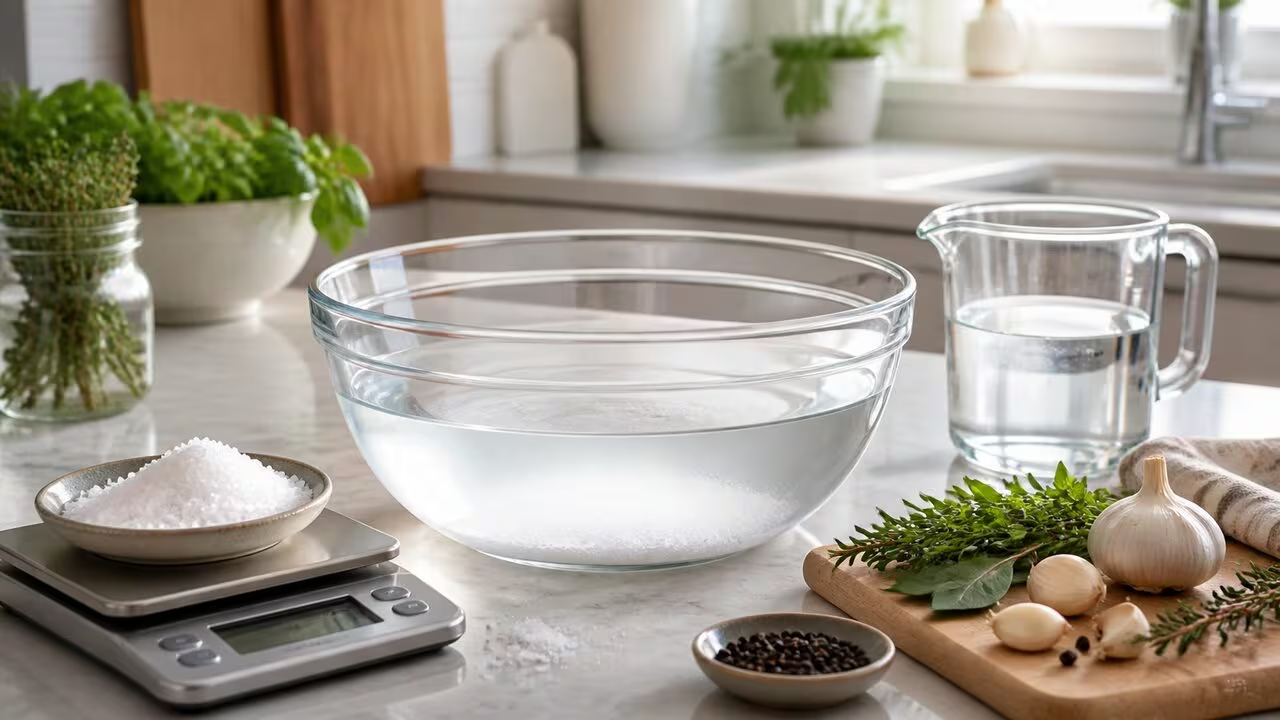
Why brine by percentage instead of by the spoonful
A wet brine is simply water mixed with salt, and sometimes sugar, used to season food before cooking. The idea sounds simple, but the ratio matters. Too little salt and the brine does very little. Too much and the food can become harsh, overly salty, or oddly firm. This calculator helps you mix a brine by percentage so you can scale the recipe up or down without guessing. If you know how much water you want to use and what salt percentage you want, the calculator gives you the exact grams of salt to weigh out. If you also want sugar for balance and browning, it calculates that too.
Brining is popular because it is practical. A measured brine can help poultry stay juicy, give pork more even seasoning, and lightly season seafood or vegetables. It is especially useful when you want repeatable results. Instead of relying on rough spoon measurements or vague advice like “make it salty,” you can work from a clear percentage. That makes it easier to compare recipes, adjust for different foods, and keep notes that actually mean something the next time you cook.
This page focuses on a straightforward kitchen model: 1 liter of water is treated as approximately 1000 grams. That is close enough for everyday cooking and makes percentage calculations easy to understand. The calculator is therefore best thought of as a wet-brine mixing tool. It does not try to predict exact brining time, final sodium content in the cooked food, or the effect of every ingredient you might add. Instead, it gives you a solid baseline so the core salt-and-water math is correct from the start.
What the calculator does
The calculator takes four inputs. First is the water amount, followed by the unit for that amount. You can use liters, milliliters, US cups, US quarts, or US gallons. Next is the salt percentage, which is the weight of salt relative to the weight of the water. The final input is an optional sugar percentage. Once you enter those values, the calculator converts the water to liters, estimates the water weight in grams, and multiplies by each percentage. The result is shown in grams because weight is the most reliable way to measure salt and sugar. Different salts can have very different crystal sizes and densities, so a tablespoon of one salt may not weigh the same as a tablespoon of another.
That means the calculator is especially helpful when you are using kosher salt, flaky sea salt, fine sea salt, or table salt interchangeably. If you weigh the ingredient, the crystal shape matters much less. The number of grams is the number that counts. This is why professional kitchens and careful home cooks usually prefer weight-based brines.
The salt-to-water math behind a wet brine
This calculator treats 1 liter of water as approximately 1000 grams, then applies your chosen salt percentage:
If you add sugar, it’s the same structure:
In plain language, a 5% brine means the salt weighs 5% as much as the water. So if you use 2 liters of water, that is about 2000 grams of water. Five percent of 2000 grams is 100 grams of salt. The same logic works for sugar. A 2% sugar addition in the same 2 liters would be 40 grams of sugar.
These equations are a practical kitchen approximation. If you are brining with juice, stock, buttermilk, beer, or another liquid that already contains dissolved solids, the result is still useful as a baseline, but it is no longer a perfect pure-water model. Likewise, if your recipe includes soy sauce, curing salt, or another salty ingredient, you should account for that separately.
Setting up the brine in the calculator
Start by deciding how much liquid you need to fully cover the food. Enter that amount and choose the matching unit, rather than converting your recipe by hand. Then choose a salt percentage. For many home wet brines, something in the 3% to 6% range is a common starting point, depending on the food and the brining time. If you want a touch of sweetness or better browning, enter a sugar percentage as well. Sugar is optional. It does not replace the salt, but it can soften the flavor profile and help with color during cooking.
After you calculate, the result area shows the water amount and the exact grams of salt and sugar to mix in. The copy button lets you save a quick summary for a shopping list, recipe note, or text message. The calculator does not change your recipe automatically; it simply gives you the measured ingredient amounts so you can mix the brine accurately.
A worked example: chicken in 1.5 liters
Suppose you want to brine chicken pieces in 1.5 liters of water using a 4% salt brine and 1.5% sugar. The water weighs about 1500 grams. Salt is 1500 × 0.04 = 60 grams. Sugar is 1500 × 0.015 = 22.5 grams. So your brine would be 1.5 liters of water, 60 grams of salt, and 22.5 grams of sugar.
That example shows why percentages are so convenient. If you later decide you need 3 liters instead of 1.5 liters, you do not need a new recipe. You just double everything. The same percentages still work, and the calculator handles the arithmetic instantly.
Choosing a brine strength
Brine strength depends on both the food and the time. A stronger brine works faster, but it also gives you less room for error. A weaker brine is gentler and often easier for beginners to manage. Thin foods such as fish fillets or boneless chicken breasts usually need lighter brines or shorter times. Large items such as whole chickens or turkeys can handle longer brining and often use moderate strengths. There is no single perfect percentage for every ingredient, which is why a calculator is useful: it lets you test a method, take notes, and make small adjustments next time.
Sugar is even more flexible. Some cooks skip it entirely. Others use a small amount to round out the flavor, especially for pork or poultry. Brown sugar, white sugar, honey, and maple syrup all bring different flavors, but the calculator expresses the sweetener as a percentage by weight so you can start from a consistent target. If you switch sweeteners, remember that syrups and honey also add water and flavor compounds, so the result is still an approximation rather than a lab-grade formulation.
Salt types and measurement accuracy
Not all salts behave the same when measured by volume. Fine table salt packs tightly. Kosher salt is usually lighter by volume. Flaky sea salt can be lighter still. That is why one tablespoon of one salt may taste much saltier than one tablespoon of another. By using grams, this calculator avoids that problem. If you have a kitchen scale, use it. If you do not, the calculator still teaches the right ratio, but your final result will be more dependable if you weigh the ingredients instead of scooping them.
Another practical note is dissolution. Salt and sugar dissolve more easily in warm water. Many cooks heat part of the water to dissolve the ingredients, then add cold water or ice to bring the brine back down to a safe temperature before adding food. That step is not required for the math, but it often makes mixing easier.
Worked interpretation of the result
When the calculator says, for example, “Salt: 50.0 g (5.0%),” that means you should weigh out 50 grams of salt for the amount of water you entered. It does not mean the final food will contain 5% salt by weight after brining. The percentage refers to the liquid mixture, not the finished dish. Food absorbs some of the brine over time, but the exact amount depends on thickness, time, temperature, and the type of food. So the result is a mixing instruction, not a nutrition label.
That distinction matters because people sometimes compare a wet brine percentage to a dry-brine percentage or to the sodium content of a finished product. Those are different ideas. This calculator is specifically for mixing a wet brine solution.
Reference table for common wet brines
Salt percentage depends on what you’re brining and how long it will soak. The table below is a practical starting point for many home cooks. It is not a strict rulebook, but it gives you a useful range to begin with.
| Use case | Salt % | Typical time | Notes |
|---|---|---|---|
| Quick poultry pieces | 3–5% | 1–4 hours | Good baseline for chicken breasts or thighs |
| Whole chicken | 4–6% | 4–12 hours | Keep chilled throughout |
| Turkey | 4–6% | 8–24 hours | Overnight is common |
| Pork chops | 3–5% | 2–8 hours | Helps prevent dryness |
| Fish (light brine) | 2–3% | 15–60 min | Short time to avoid over-salting |
Where this brine model stops being exact
This calculator is intentionally simple, which makes it useful but also means it has limits. It assumes the liquid behaves like water at roughly 1000 grams per liter. That is close enough for most kitchen work, but not exact for every liquid. It also assumes the percentages are based on the water weight only, not on the total weight after salt and sugar are added. Many home recipes use this convention because it is easy to scale and easy to understand.
The calculator also does not tell you how long to brine a specific cut, how much of the salt will move into the food, or whether a recipe with acidic ingredients will change texture. It does not account for pre-salted broths, soy sauce, pickling salt blends, curing salts, or injected meats. If you are making a cured product, following a fermentation recipe, or working with food preservation rather than ordinary cooking, use a recipe designed for that purpose instead of relying on a general brine calculator.
Food safety and practical tips
Always brine in the refrigerator or in a well-iced cooler that stays at a safe temperature. Never leave raw meat in brine at room temperature. Use a non-reactive container such as food-safe plastic, glass, stainless steel, or a brining bag. Once the brining time is complete, discard the used brine. Do not reuse it for another batch. If you want to save aromatics such as bay leaves or peppercorns, start a fresh brine instead of reusing liquid that touched raw food.
After brining, many cooks pat the food dry before cooking. That helps the surface brown better, especially if the food will be roasted, grilled, or pan-seared. If you used a stronger brine or a longer brining time, you may also choose to skip extra salt in the final seasoning until you taste the cooked result.
Why precision helps
Precise brine calculations reduce waste and make your cooking more repeatable. If you know that 4% salt for 4 hours gave you the best pork chops you have made, you can reproduce that result next time with confidence. If a turkey came out slightly too salty, you can lower the percentage or shorten the time and know exactly what changed. That kind of controlled adjustment is much harder when the original recipe was based on rough spoonfuls and memory.
In short, this calculator is a measuring tool and a learning tool. It gives you the numbers, but it also helps you think in percentages, which is one of the most useful habits in kitchen prep. Once you understand the ratio, scaling a brine becomes easy whether you are making enough for two chicken breasts or a large holiday bird.
Optional mini-game: Brine Balance Rush
A fast kitchen arcade run inspired by the same core idea as the calculator: balance salt, sugar, and water precisely instead of guessing.
Brine station ready.